
In today’s hyper-connected world, your driving school’s website is frequently the initial point of contact for prospective students. It’s their digital storefront, and first impressions matter. A clunky, outdated, or difficult-to-navigate website acts as a virtual “closed” sign, instantly driving potential learners to your competitors who offer a smoother, more professional online experience. Think about it: in a competitive market, why would a student struggle with a confusing website when they can easily find a competitor with a user-friendly platform?
Conversely, a well-designed website can be your most powerful marketing tool, working 24/7 to attract and convert casual browsers into paying pupils. It’s more than just an online brochure; it’s a dynamic lead generation engine. A compelling website can showcase your unique selling points, build trust and credibility, and ultimately persuade visitors to choose your driving school over the competition. This article delves into essential web design strategies specifically tailored for driving schools, providing actionable advice to help you turn clicks into learners and grow your business. We’ll explore key elements like mobile responsiveness, search engine optimization (SEO), clear call-to-actions, compelling content, and user-friendly navigation, all designed to maximize your online presence and attract more students.

Your website’s design should immediately communicate professionalism and trustworthiness. Avoid cluttered layouts and opt for a clean, modern design that is easy on the eye. High-quality images and videos of your instructors, vehicles, and even testimonials from past pupils can build trust and credibility. Crucially, your contact information should be prominently displayed, making it easy for potential pupils to reach you.
Most people today browse the internet on their smartphones. Therefore, a mobile-first approach is non-negotiable. Your website must be fully responsive, meaning it adapts seamlessly to any screen size, from desktops to tablets to smartphones. A poor mobile experience can lead to frustration and a lost opportunity.
Imagine a pupil trying to find information about your pricing or course packages. If they can’t find it quickly and easily, they’re likely to give up. Intuitive navigation is crucial. Organise your website’s content logically, using clear and concise menu labels. A search bar can also be a valuable addition, allowing users to find specific information quickly.

Content is king. Your website should feature informative and engaging content that answers potential pupils’ questions and showcases your expertise. This includes details about your driving instructors, course offerings, pricing, FAQs, and any special promotions. Consider adding a blog section where you can share helpful driving tips, road safety advice, and updates about your driving school.
A clear call to action (CTA) is essential for converting visitors into leads. Make it obvious what you want visitors to do. Use compelling CTAs like “Book a Lesson,” “Get a Free Quote,” or “Contact Us Today.” Place these CTAs strategically throughout your website, particularly on your homepage, course pages, and contact page.
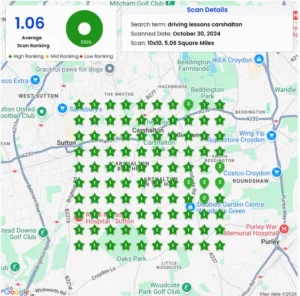
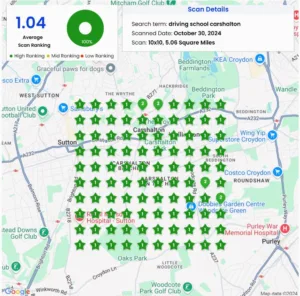
For driving schools, local SEO is paramount. Optimise your website for local search by including your city and region in your website’s content, meta descriptions, and title tags. Claim and optimise your Google My Business profile, ensuring your contact information, hours of operation, and customer reviews are accurate and up-to-date. This will help you rank higher in local search results and attract pupils in your area. (See below Google maps rankings for a driving school in Carshalton) SEO for Driving Schools
Positive reviews and testimonials from past pupils can significantly influence potential learners. Feature testimonials prominently on your website, and encourage satisfied pupils to leave reviews on platforms like Google, Yell, and Facebook. Social proof builds trust and demonstrates the value of your driving school.
Use website analytics tools like Google Analytics to track your website’s performance. Monitor key metrics like traffic, bounce rate, and conversion rates. This data will provide valuable insights into how users are interacting with your website and help you identify areas for improvement.
Your driving school’s website is not just an online brochure; it’s a powerful marketing tool that can drive significant growth. By implementing these web design strategies and a local SEO plan, you can create a website that attracts more visitors, converts them into learners, and ultimately helps your driving school thrive. Investing in a professional website is an investment in your future success.